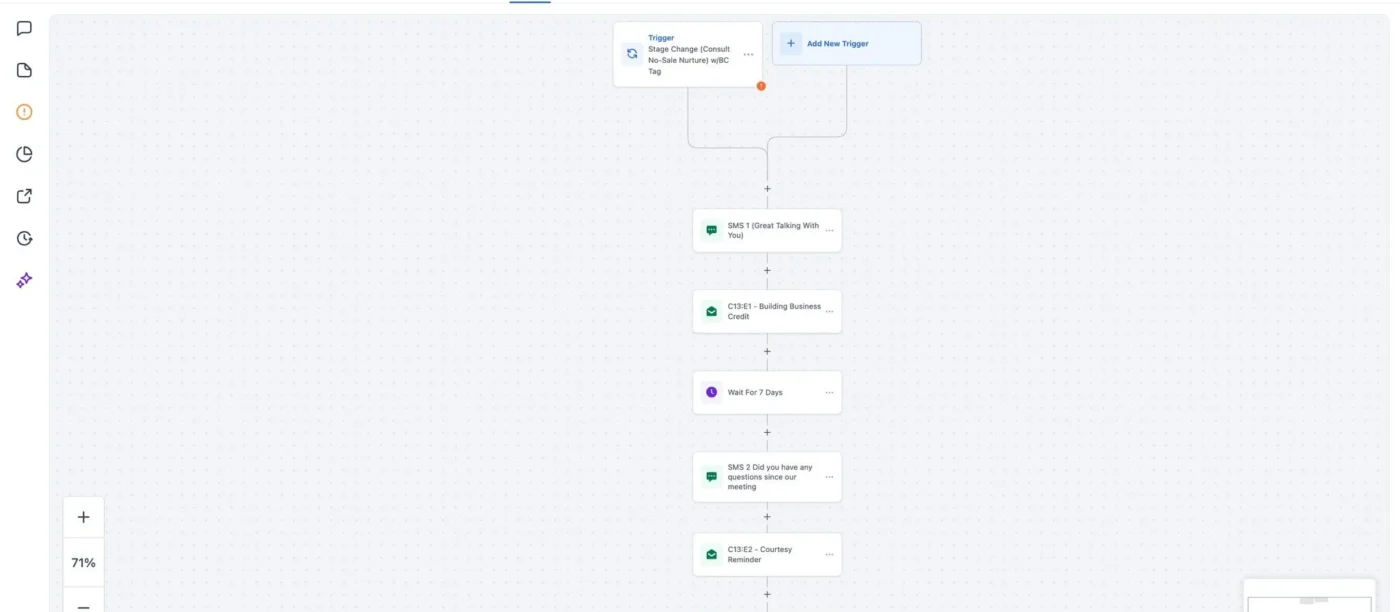
A 90-day follow-up system for consultations that did not close: twenty-five alternating SMS and email touchpoints, triggered by a pipeline stage change and ending by moving the stage itself.
Results at a Glance
A consultancy selling business credit services books consultations steadily, and most of them do not close on the call. In this market that is normal rather than a failure: the reason to buy tends to arrive weeks later, when a funding need becomes real.
The brief was to keep the business in front of those leads for ninety days after a no-sale consult, without anyone having to remember to do it, and without becoming the company that pesters people until they block the number.
A follow-up sequence that runs for three months fails in one of two ways: everybody forgets it exists, or it irritates people into opting out.
Follow-up depended on memory
After a no-sale consult the lead went back onto a list nobody worked. The intention was always there; the discipline never survived a busy month.
The timing problem, not a rejection
Business credit is a considered purchase. The trigger to buy often lands weeks after the call, by which point the conversation has been forgotten.
Nurture that turns into noise
Ninety days of contact either builds authority or gets you marked as spam, and the difference is cadence and content rather than volume.
The challenge was real, and it was costing time, money, and client experience.
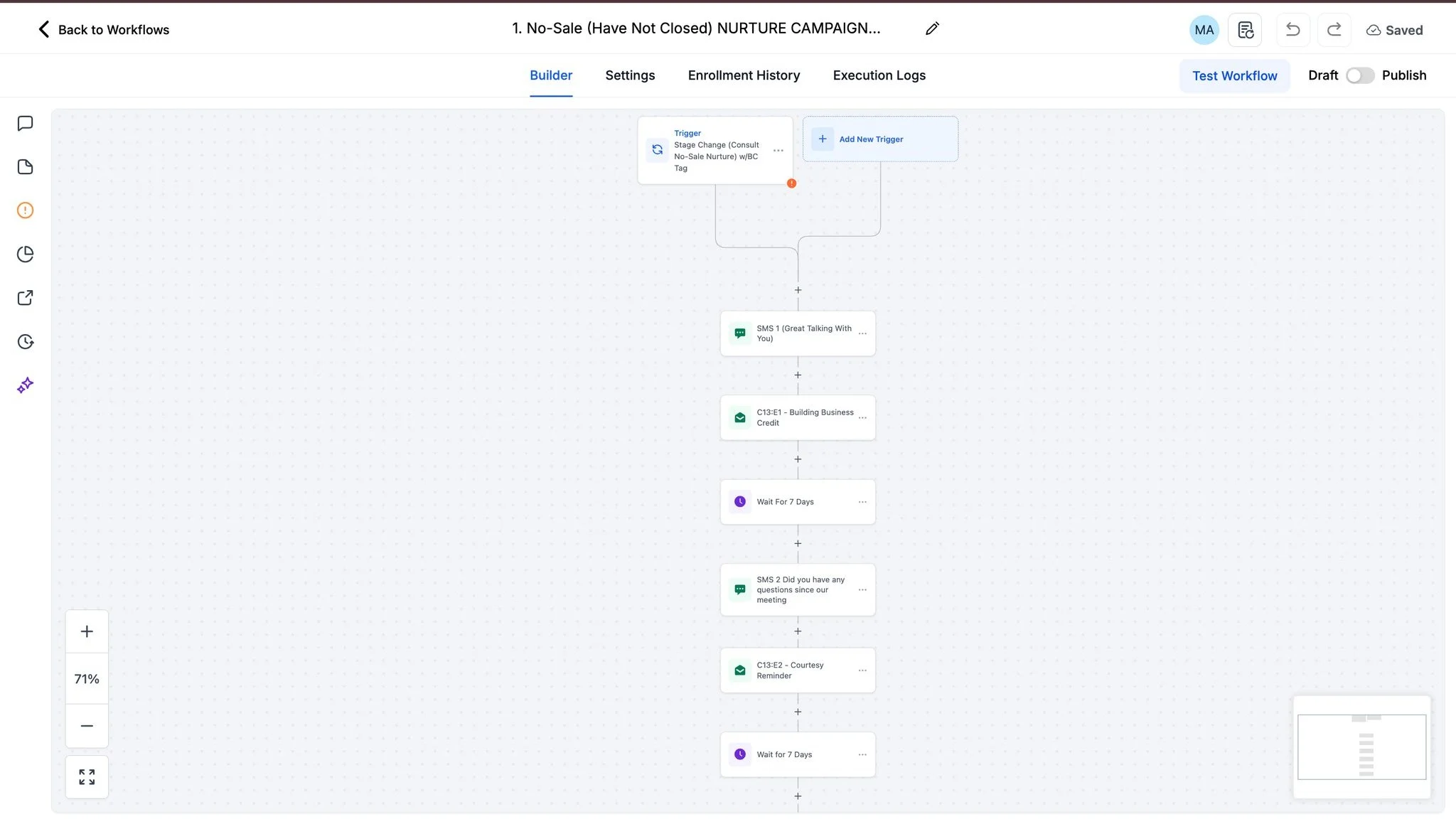
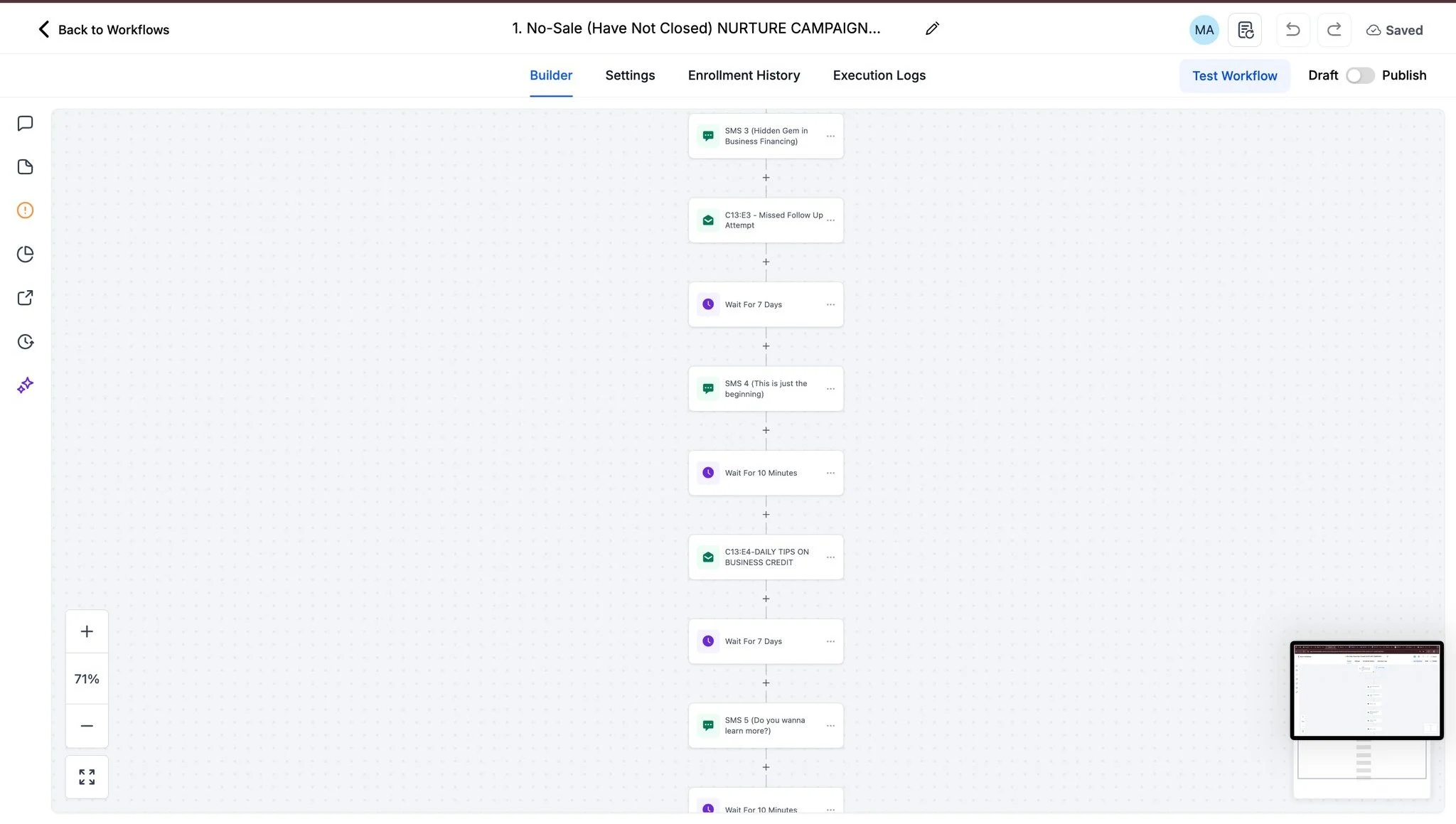
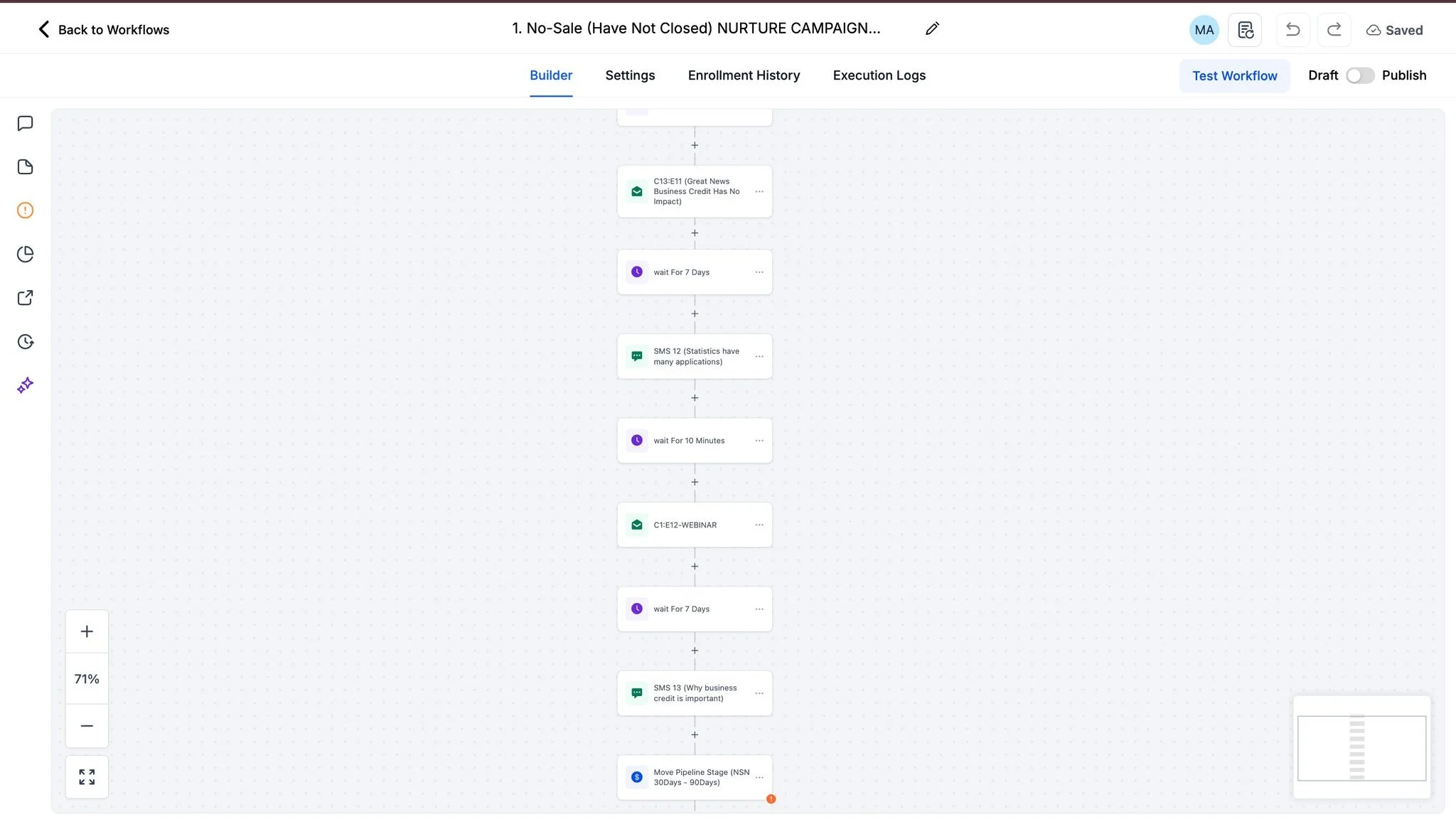
The sequence pairs its channels deliberately. An SMS goes out first, then ten minutes later the matching email lands. The text earns attention on the phone; the email arrives while the business is still in mind and carries the substance a text cannot. Each pair is followed by a seven-day wait, so the lead hears from the consultancy weekly rather than daily.
The content climbs a ladder instead of repeating one ask. It opens on courtesy (a thank-you for the call, a gentle reminder), moves into education (building business credit, daily tips, the hidden gem in business financing), and only then introduces conversion assets such as the webinar. The workflow closes by moving the contact from the thirty-day to the ninety-day pipeline stage, so the CRM records lead age by itself and later automation has something accurate to work from.
The solution was designed from the ground up to fit this exact business.
Set the cadence and the content ladder before building a single step.
SMS first, matching email ten minutes later, then a seven-day wait.
Thirteen SMS and twelve emails wired end to end in GoHighLevel.
Enrolment scoped by stage and tag; the sequence ends by moving the stage.
Key sections of the delivered site, and the thinking behind each one. Click any frame to open it full size.
Each tool chosen specifically for reliability, integration depth, and ease of use for the client.
Workflow engine, triggers and pipeline actions.
The attention channel, sent first in every pair.
The substance channel, ten minutes behind.
A stage change both starts and ends the sequence.
A follow-up system that runs for three months without anyone remembering it exists.
From the no-sale consult to the pipeline move.
Thirteen SMS and twelve emails, alternating.
Lead age recorded without anyone touching the CRM.
Send me the brief, a Figma file, a reference site or a rough outline, and you'll have a fixed quote with a delivery date within 24 hours.