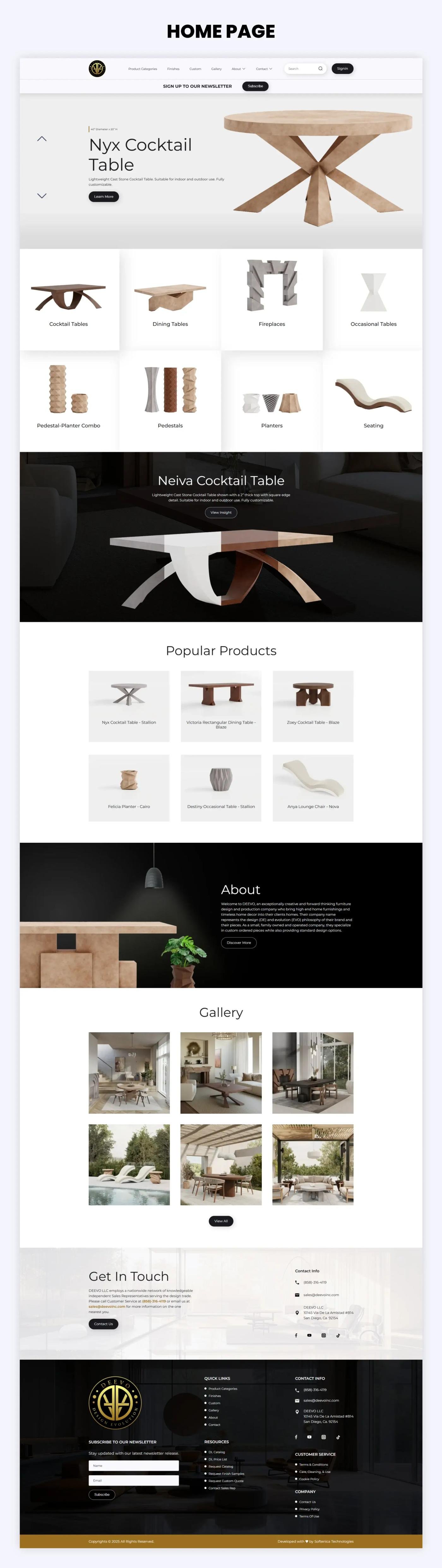
This brand does not sell to the public. It sells through the design trade, which changes what a website is for: the catalogue has to be completely open so a specifier can browse it, while pricing and ordering sit behind an account. The build is that split, made to feel like one site.
Results at a Glance
A designer specifying furniture needs dimensions, finishes and photography without filling in a form first. A retail-style store that hides the range behind a login loses that specifier at the front door.
But the same brand cannot publish trade pricing openly, because its sales representatives negotiate it. So the catalogue is public, the price list is gated, and the two live in the same navigation rather than on two separate sites.
A standard e-commerce build assumes one path: browse, add to cart, pay. Trade furniture does not work that way. A buyer might want a printed catalogue, a price list, physical finish samples, a quote for a custom piece, or simply the name of their local representative. Forcing all of that through a cart would lose most of it.
Trade pricing cannot be public
Representatives negotiate it, so a published price list undercuts the sales channel.
Specifiers browse by finish
The same piece exists in several stone finishes, and the finish is often chosen first.
A cart is the wrong tool
Catalogues, samples, custom quotes and rep contact are all different asks with different outcomes.
Gating must not block browsing
A login wall in front of the range loses the specifier before they see anything.
The challenge was real, and it was costing time, money, and client experience.
Products are organised by category and by finish, because finish is how this trade actually shops: the same table exists in several stone finishes and a specifier arrives knowing the finish before the model. Each product carries its own dimensions and finish options rather than a generic variant dropdown.
The cart is replaced by six explicit routes: download the catalogue, download the price list, request a printed catalogue, request finish samples, request a custom quote, and contact a sales representative. Account sign-in gates the pricing documents. Nothing else about the site is hidden.
The solution was designed from the ground up to fit this exact business.
Browse by product category and by finish, because the trade shops both ways.
Account sign-in covers the price list, never the product pages.
Six distinct asks, each landing with the right person rather than a generic inbox.
Finish samples and custom quotes handled as their own flows.
Each tool chosen specifically for reliability, integration depth, and ease of use for the client.
Catalogue, finishes and content.
Product structure and trade accounts.
Pricing documents behind dealer sign-in.
Six enquiry types, each to the right destination.
A trade catalogue that respects how designers actually specify furniture.
The full range is public, so a specifier never hits a wall.
Price list and dealer documents sit behind an account.
Catalogue, price list, samples, custom quote and rep contact.
Send me the brief, a Figma file, a reference site or a rough outline, and you'll have a fixed quote with a delivery date within 24 hours.